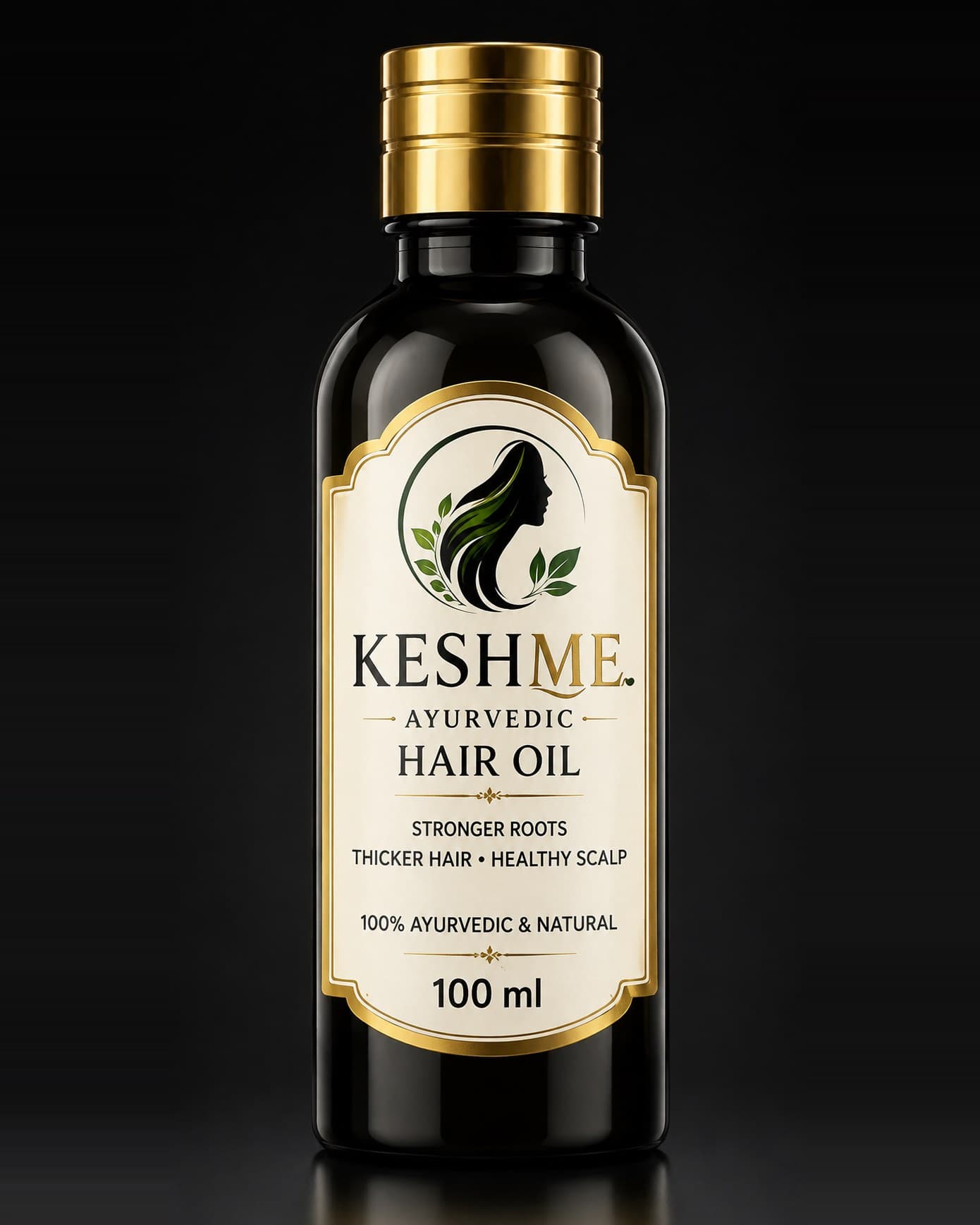
Using hair oil
The method is the same for everyone; the amounts are not. How to adjust quantity, timing and frequency for your own scalp and hair.
Three things: how much oil you use, how long you leave it on, and how often you repeat it. The method itself — scalp first, fingertips, five to ten minutes, then wash it out — does not change at all.
That is worth saying plainly because the category tends to imply otherwise. A product is not formulated for one scalp type and against another; what varies is how much of it a given head of hair can take before the wash becomes a chore.
Starting points, not prescriptions — adjust from here based on how your hair feels after the wash.
| If your… | Use | Leave it on |
|---|---|---|
| Scalp is oily | Less than you think — concentrate on the scalp and skip the lengths | About an hour, and wash the same day rather than overnight |
| Scalp is dry or flaky | A normal amount, worked in slowly over the full five to ten minutes | One to two hours, or overnight if it suits you |
| Hair is fine | Noticeably less — fine hair is easily weighed down and hard to rinse clear | An hour is plenty |
| Hair is thick or coarse | More, and part the hair into more sections so the scalp is actually reached | Two hours or overnight |
| Hair is curly | A normal amount on the scalp, plus the remainder through the lengths | Overnight is often easiest around a wash-day routine |
| Hair is colour-treated | A normal amount; the KESHME shampoo is colour-safe and sulfate-free | As usual — the wash matters more here than the oil |
Yes, and the usual reason people conclude otherwise is quantity rather than the practice. An oily scalp already has sebum on it, so the same amount of oil that suits a dry scalp leaves more to be removed, the wash struggles, and the hair feels heavy afterwards — which reads as 'oil does not suit me'.
Using less, staying on the scalp rather than the lengths, and washing the same day instead of the next morning addresses all three. If it still feels heavy, use less again. There is no minimum dose to hit.
Mildly, and mostly through comfort rather than anything about the hair. In Indian summers a heavier application left on overnight is simply unpleasant, and people sweat it out; in winter the same application is comfortable and easy to leave in.
Adjust for what you will actually be willing to repeat. A routine done twice a week at a comfortable amount beats a thorough one abandoned in April.
Do not apply oil to broken skin, an open scratch, sunburn, or a scalp that is currently inflamed, weeping or painful. Do not use it alongside a prescribed topical scalp treatment without asking the doctor who prescribed it.
A scalp condition — persistent flaking that does not respond to a normal wash, itching, redness, sudden shedding or bald patches — is a reason to see a doctor or trichologist, not a reason to change hair oil. Nothing in this range is a treatment for any of those.
This guide describes a cosmetic hair-care practice and what is in our products. It is not medical advice. If you have a scalp condition, persistent irritation, sudden hair loss or any other medical concern, speak to a doctor or a qualified trichologist.