Using hair oil
How much oil to use, how to work it into the scalp, how long to leave it on, whether overnight is necessary, and how often to repeat it.
Warm a small amount of oil in your palms, part your hair in sections and massage it into the scalp with your fingertips for five to ten minutes, then work what is left down the lengths. Leave it in for at least one to two hours — overnight is optional, not required — and wash it out with a mild shampoo. Two to three times a week is a normal frequency.
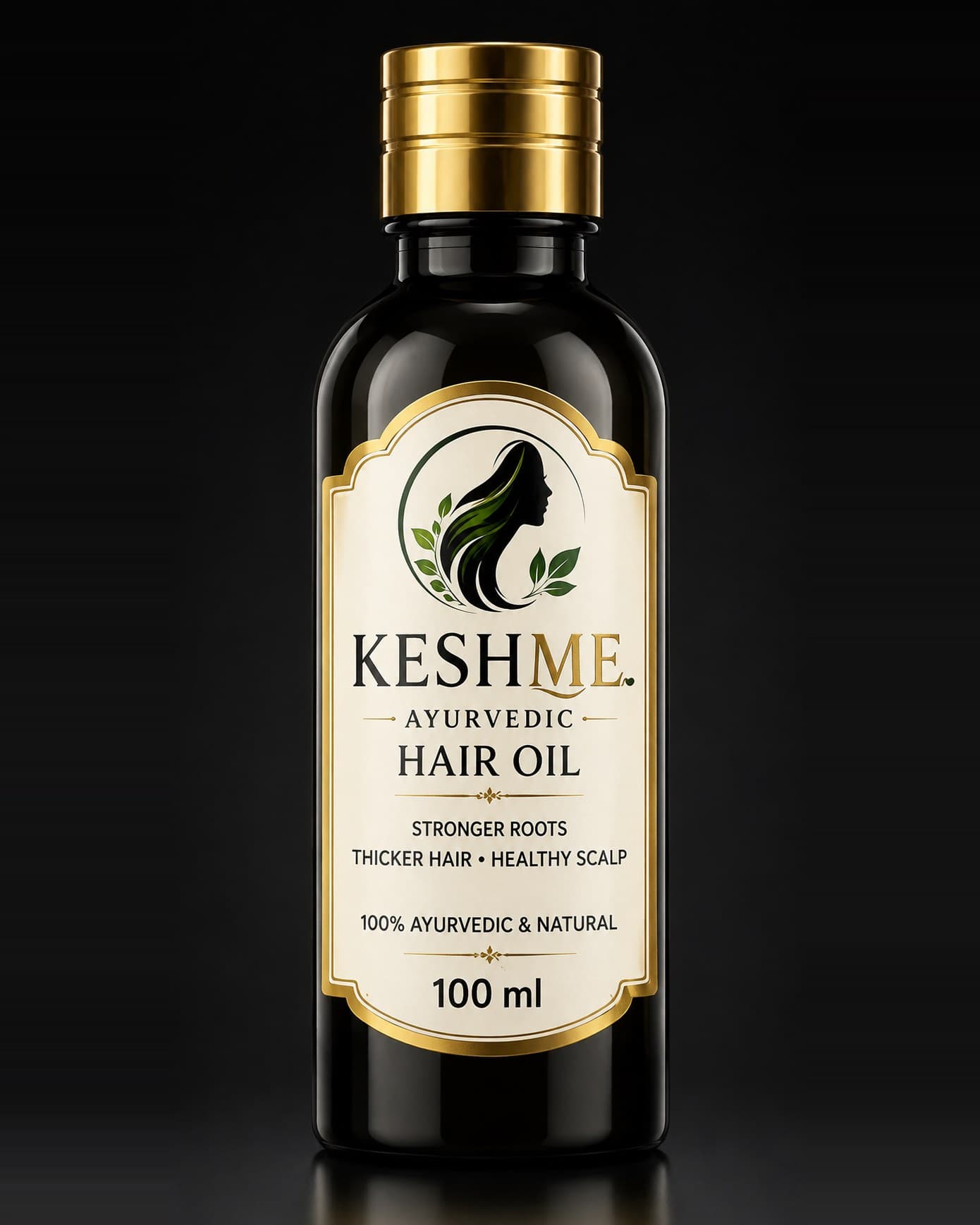
That is the method printed on the KESHME Ayurvedic Hair Oil pack, and it is the same method most pre-wash oiling routines follow. The rest of this guide is the detail behind each step.
These are the directions as printed on the KESHME Ayurvedic Hair Oil pack, with a note on each.
For shoulder-length hair that is roughly a tablespoon; for very short hair, less; for long or thick hair, a little more. The test is coverage, not quantity — you want the scalp damp, not the hair dripping. Using more oil than the scalp can hold does nothing except make it harder to wash out, which is the most common reason people conclude a shampoo has left their hair greasy.
Fingertips, not nails. Part the hair into four or five sections so the oil reaches the scalp rather than sitting on top of the hair, and work in small circles. Keep the pressure light — this is a massage, not scrubbing, and vigorous rubbing on a wet or oiled scalp is how hair gets tangled and pulled.
An hour is enough for the oil to coat the scalp and hair. Longer does not do more in any way you will notice; leaving it overnight is a matter of convenience, not effectiveness. If you do sleep in it, use an old pillowcase or wrap your hair.
Apply shampoo to the hair BEFORE adding water — shampoo lifts oil far more easily when it is not already diluted. Rinse, then judge whether a second, shorter wash is needed. Most people find one thorough wash is enough if the oil was applied in a sensible quantity.
This is a routine, not a treatment course. Fit it around your wash days rather than adding wash days to fit it around.
Steps as printed on the KESHME Ayurvedic Hair Oil packaging.
Before. Hair oil of this kind is a pre-wash treatment: it goes on dry hair, stays on for an hour or more, and is then washed out. Applying it after shampooing leaves it in the hair, which is what a leave-in serum is designed for and what a pre-wash oil is not.
This is worth being clear about because the two products look similar on a shelf and the instruction on the pack — wash it out — is easy to skim past. If you have applied an oil like this after washing, there is no harm done; simply wash it out and apply it before your next wash instead.
Both, but the scalp first and with most of the oil. The scalp is skin, it is where the massage happens, and it is the part of the routine that takes the five to ten minutes. Whatever remains on your palms after that is what goes through the mid-lengths and ends.
The ends are the oldest part of the hair and get the least benefit from the massage itself, so they are a place to use up the remainder rather than a target to saturate.
Two to three times a week is the frequency printed on the KESHME pack, and it is a reasonable default. The practical constraint is that oiling is tied to washing — every oiling session ends in a shampoo, so you cannot oil more often than you are willing to wash.
If you wash your hair twice a week, oil twice a week. If you wash once, oil once. Oiling more often than you wash means either leaving oil in, which this product is not designed for, or washing more often than you would otherwise choose.
Patch test first: apply a little to the inside of your forearm and leave it for 24 hours. Any product with a long botanical ingredient list is a product with many things you might individually react to.
Stop using it if irritation occurs, and keep it away from the eyes. If you are pregnant, breastfeeding, being treated for a scalp condition or using a prescribed topical treatment, ask a doctor before adding anything new to your routine.
This guide describes a cosmetic hair-care practice and what is in our products. It is not medical advice. If you have a scalp condition, persistent irritation, sudden hair loss or any other medical concern, speak to a doctor or a qualified trichologist.