Choosing a product
Six things worth checking on any hair oil pack before you buy it, including ours — and the two that most people never look at.
Almost everything you can verify about a hair oil is printed on the pack, and almost nothing you can verify is in the advertising around it. Net volume, MRP, the ingredient list and the formulation statements are checkable facts; 'nourishes from within' is not.
None of the six checks below require any expertise. They take about a minute in a shop or on a product page, and they are the ones that separate products more reliably than the front of the bottle does.
| Check | What to look for | Why it matters |
|---|---|---|
| Net volume | The millilitre figure, usually near the barcode | It is the denominator for every price comparison, and it varies far more between products than the shelf price does. |
| Price per 100 ml | Divide MRP by volume yourself | A ₹450 bottle of 100 ml and a ₹600 bottle of 200 ml are not what they look like at a glance. |
| The first ingredient | The base oil at or near the top of the list | Ingredients are listed in descending order of quantity, so the first one is most of what you are buying. |
| Named vs unnamed herbs | Individual herbs, ideally with botanical names | 'A blend of Ayurvedic herbs' is not a list. A pack that names each one is committing to something. |
| 'Free from' statements | Which specific things are excluded | These are factual, checkable statements about the formulation — unlike claims about outcomes. |
| MRP and tax | Whether MRP is stated as inclusive of all taxes | In India it normally is, which means the shelf price is the price you pay. |
Divide the MRP by the net volume and multiply by 100. That single number makes hair oils comparable in a way the shelf price never does, because bottle sizes in this category range from 50 ml to 500 ml and the packaging rarely makes that obvious.
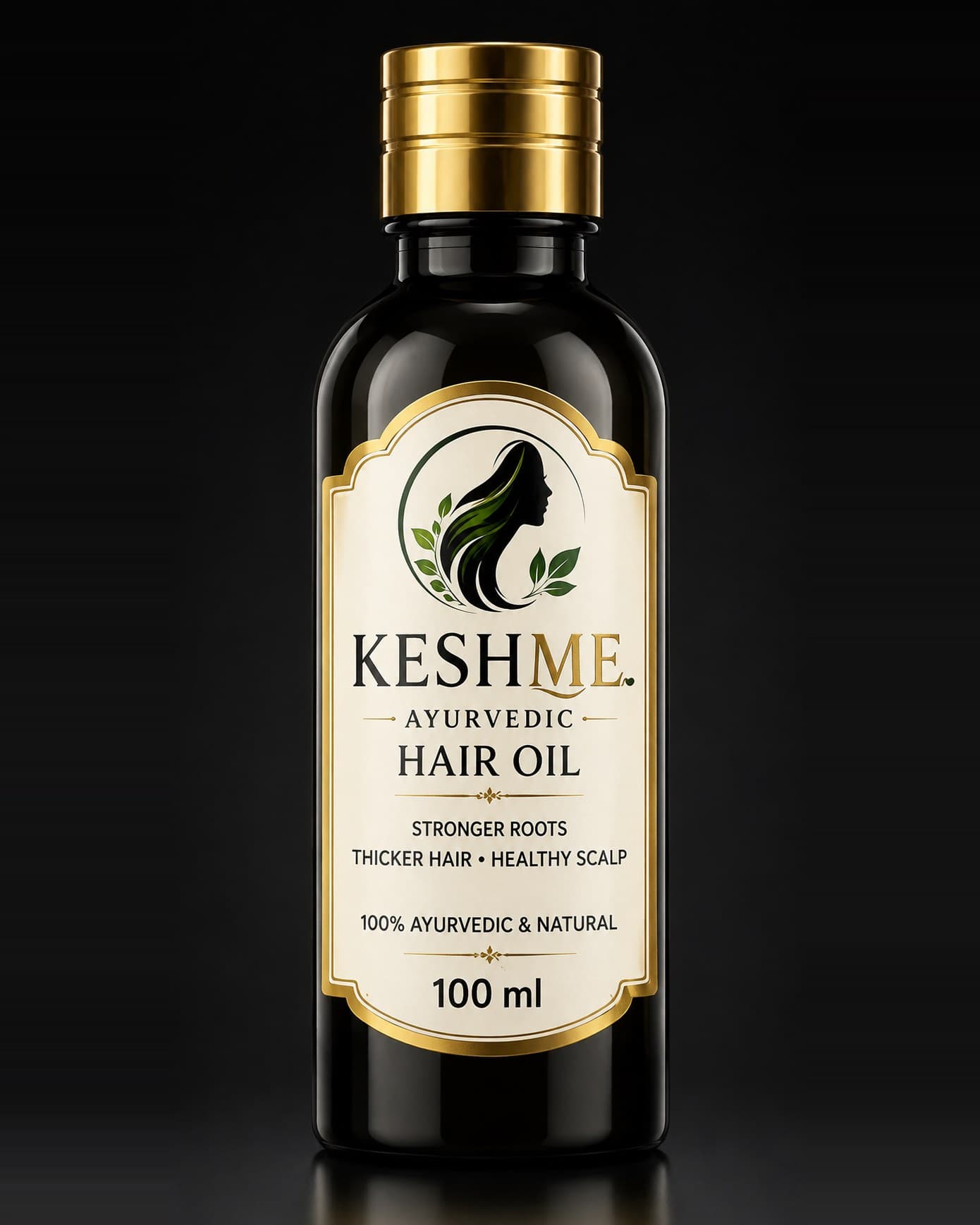
For reference: KESHME Ayurvedic Hair Oil is ₹450 for 100 ml, which is ₹450 per 100 ml. We publish it that way because that is the comparison a shopper should be making, including when it is not flattering to us.
A 'free from' statement is a factual claim about what a formulation excludes — 'No Paraben' means the product does not contain parabens. That is verifiable, and it is a different kind of statement from a claim about what the product achieves.
It is not, however, a claim that the excluded ingredient was harmful, and a long list of exclusions is not the same as a good formulation. Treat these as one input among several: they tell you what the formulator chose not to use, which is genuinely useful information and nothing more than that.
The KESHME hair oil pack states No Paraben, No Mineral Oil, No Silicone, No Colour and Cruelty Free. The shampoo pack adds No Sulfate.
A promise of a guaranteed outcome, a specific figure for how much hair will grow, before-and-after photographs, and any suggestion that a cosmetic oil is a remedy for a medical condition. A cosmetic product is not a medicine, and a promise about hair is a promise about biology.
Our own packaging carries lines of this kind, printed by the manufacturer. We have chosen not to republish them on this website, because we cannot substantiate them — and telling you that is more useful than repeating them.
This guide describes a cosmetic hair-care practice and what is in our products. It is not medical advice. If you have a scalp condition, persistent irritation, sudden hair loss or any other medical concern, speak to a doctor or a qualified trichologist.